One of my favorite economists frequently points out that a looming disaster will eventually happen. That had crossed my mind this spring when my parents wrote that the woods were full of deadwood and the forest was dry from a warm, fake winter. I'm not sure "tenderbox" was the exact word they used, but I was completely unsurprised to hear that fires were breaking out all over the front range this spring. I was surprised to hear about one in Waldo Canyon.
You see, I grew up near there. I have been to Waldo Canyon many times. It's a favorite place to run. We took the troop there and lost a kid there once. There's a huge quartz outcropping that overlooks Highway 24 that's a marvel. So, I also know very well that a fire there is bad news all around: it's a dry place to start with, it's hard to access, and it's geographically proximal to Colorado springs, Manitou Springs, Green Mountain Falls, Woodland Park, and a bunch of other communities in the region. It's a great place to light a fire if you want to wreak havoc.
Within a few days, things had gotten out of hand, and the fire was eating homes. Dad and I had a somber conversation. He pointed out that this was the Big One™ that they'd be worrying about for years. They had to figure out what they really, really wanted, put it in the car and leave everything else. They had to switch hotels because the first one got evacuated too. The fire was a complete and utter disaster.
They were lucky. Their house survived. Things are ok.
But there's a big chunk of mountain that's burned. It's like the Hayman Fire. A lot of favorite places are closed and will never be the same. Every west slope park between Manitou Springs and the airforce academy is closed and gone. The fire burned right out onto the plains and into the city.
View The Gazette's Evacuations Area and Fire Vicinity in a larger map
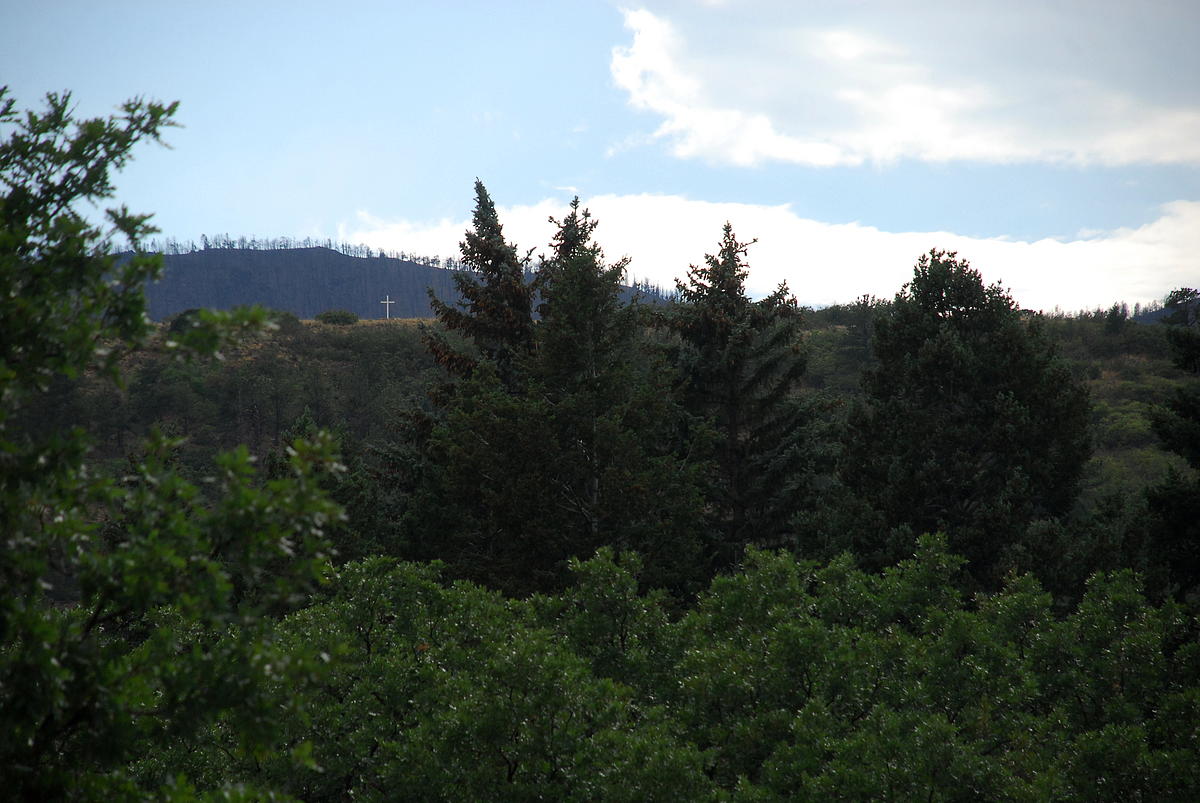
I was recently there, and I decided to take some photos of my own for posterity. Much like the Hayman fire, access to the burn area is very restricted, and will probably remain so for a while until underbrush has a chance to take over. This fall and winter, then the following spring will bring a huge amount of erosion that will wash out the roads with debris flows. Having people screwing around will only make that process worse. Sadly, that limits personal access to the burn area.
Rampart Range Road is closed just above Woodland Park, all the way to Garden of the Gods. The best place to see the burn is actually from Colorado Springs itself.
This house was a quarter mile from the burn line and still caught fire, I presume from falling embers.
This is the Waldo Canyon Trailhead, for which the fire is named. It's closed to the public now.
The fire line reaches to Highway 24 in places.
Heavy rains cause debris flows that can come out of the burn areas and flood the highway. They're not just water and mud, but large chunks of rock and wood that damage cars. My dad got on the wrong side of one and it put a hole in his oil pan, and filled the engine compartment with dirt and debris.
In a few years, it's going to be really beautiful. The exposed ground will be covered by brush and shrubs as the cycle renews. Meadows may even form. The wildlife will come back. It doesn't stay burnt forever.
Mountains
Thursday, August 23, 2012
Wednesday, August 22, 2012
50,000
My D200 rolled over 50,000 shutter actuations at the rollerderby bout this Saturday.
That's a long time and a lot of pictures. I have some retrospective thoughts to share:
Quality of Art
That comes out to about 10,000 photos per year, of which I keep decreasingly few photos. Why? In retrospect, each new photo I take has to compare with an increasingly large archive of past photos. It gets harder to push the technical/composition/meaning triangle as time goes on, and I see little reason to hang on to anything that's not a ringer.
I wish I'd print more of them. One of the parts of digital photography that I dislike is all the time one spends at a desk reviewing work. I think the time party is worse than one to one, which is a lot of overhead to pay. Most other artforms don't have that kind of intermediate step, or it's incredibly short.
Wear and Tear
The camera itself is showing some signs of wear. The rubber grips are delaminating from the body, the eye cup is cracked and regularly falls off. The AF-drive screw is brassed and a little rounded, the aperture arm is gently grooved, dust spots have become a little chronic, the aperture feeler ring tends to stick and there's a few hot pixels even at ISO 400. For a while I treated it quite gingerly carefully packing it in padded bags and only taking it out when I was sure nothing bad was going to happen to it. But (and this was not a watershed moment) one day the dog knocked it off the tripod onto concrete, and to my surprise, it survived. It has a metal frame and dust and splash seals. The marketing wasn't lying: you could probably pound nails with it in a pinch (just don't use the 18-135mm lens as the handle). Now I just roll it in a sweatshirt and throw it in my backpack if I'm not carrying any other photo gear. I think the shutter mechanism will wear out before dings and bumps take any toll.
General Image Quality Thoughts
The most major flaw in the camera: the hot pixel count. It is and was always high and tends to show up in unfortunate, distracting places. My brothers D60, purchased several years later, with the same sensor, has a dark frame that's almost completely dark, while the D200 has a lot of stars in it's night sky.
On a related note, the ISO performance does show the camera to be from relatively early in the DSLR line of evolution. Noise shows up at ISO 400 in a real way and gets worse from there. Can you believe it pegs out at ISO 3200 ("HI 1")? If you read that sentence in 2005, that would have sounded different. I went from cameras that topped out at ISO 400. In real life, I rarely push it beyond ISO 1600 because the noise makes whatever photo is taken so ugly that it's hard to justify using it. It does have better resolution at ISO 3200 than the film equivalent, so it does do gritty dark urban photographs pretty well. The number of times I've done that is really small. The camera sticks out too much to pull off that kind of photography.
The lack of native sharpening has required a lot of fiddling to achieve satisfying results. Something about the image processing algorithm in the camera does not normally yield photos that feel tack-sharp. To get photos to look good on screen, some sharpening always seems to be needed. All my batch processing scripts (via imagemagick) add +1 sharpening to improve things. My Canon and Sony cameras haven't had this problem, and neither have the scans from film. Looking at histograms, the D200 very rarely will produce pure white and pure black in photos, even when it's obvious. I wonder if the same algorithm is at work accross the camera's dynamic range, preventing stark luminescence transitions?
This winter, I switched switched from using the Normal image controls to a custom control that maximized the sharpening. That helped some, but it doesn't seem to be possible to combine that with the desaturated Portrait mode. There does not appear to be a way to get super-sharp photos straight from the camera.
That is, of course, assuming the camera is in focus and not moving. That's a personal flaw i've wrestled with since getting the camera. It's easy to be lazy and let the shutter speed drop beyond the point where you can hold the camera steady. I've realized the vast number of potentially good photos that have been botched by this, and now double the ISO to compensate.
Buttons Buttons Everywhere
The d200 works very hard to let me focus on photography. It is a straight forward PASM camera, no goofball icon modes, and it's very hard to bump buttons or switches and accidentally change settings. This is a subtle point that many other cameras fail to pick up on. The camera should be there for the photographer, no the other way around. There are some less fiddly cameras out there (you know who you are), and a lot of worse offenders. It's almost possible to fly it without lowering it to look at the screen. (You need the screen to change the image processing and noise filter options) The AF switch tends to get bumped to AF-C when I'm especially ham-fisted, and the CF-card door occasionally opens on it's own.
Using autofocus effectively has required a sequence of revelations about how the system works. First, the screw drive AF-D lenses are generally slower focusing than their AF-S/G counterparts. Second, the center focus point works best, it has a plus (+) based sensor while all the others are just vertical lines (|). Thus, it has an edge in the dark and for situations where there isn't much vertical contrast. Next, for things that aren't moving, use the center spot whenever possible. Third, When photographing moving objects, switch to group-AF, and bump to AF-C, and then move the hot AF sensor so that the moving target is likely to cross all the AF points. The system can't predict the focus for what isn't in the frame, and using a group of AF sensors helps overcome twitchy or complex subject that is moving toward the camera quickly. I enabled wrap-around AF sensor selection so I can quickly bump the AF sensor from one side to the other. This is useful for races and rollerderby where the subjects are crossing the frame in both directions: it's easier to get the AF selection if there's only one button push, instead of three. I have been unable to juice better AF-C performance by changing the various menu settings. Whatever changes they invoke seems very subtle and hasn't helped me take better pictures. The last point about focus is that manual focus lenses are almost impossible to focus to perfection. The focus dot will try to help out, but it doesn't have the same granularity that the AF system sees. While I had hoped to use MF lenses more with the D200, I rarely do in practice. Getting a sharp picture with them is just too troublesome.
The directional selector got a lot more compliant and easy to use after the first year. Except for middle click. That has always been awkward to push. I don't even remember what that does.
Lens Combinations
My bag of lenses has become connected with situations. Sometimes I just put something on and walk out the door, but usually I pick one for the occasion. When first got the camera, I thought I would purchase many lenses. Time, budget, and a realization that great photography doesn't have to happen at the limits of premium glass has meant that the purchase rate has been pretty low. I acquired four AF lenses in quick succession in 2007, then picked up a fifth a few years later. (There's talk of another one or two now, but honestly I'd rather have a motorcycle to take the current lenses around than have another lens and no motorcycle.)
I've learned that taking good portraits with anything less than a 50mm lens is very hard, due to the close distance it puts between the photographer and the subject. At short focal lengths, I feel like I am really in the subjects personal space. It can be a little intense. The photos get an intimate feeling because it's obvious that I'm invading the subjects space. I can see it. Between 50mm (that would be 75 mm for film and full frame sensors), and 200mm, people relax a little. Beyond that you have to yell for them to hear you. 200mm is actually pretty long for portraits. I get why a lot of portrait photographers have 50-85-100-135mm fast prime sets: that's the range where prosaic portraits tend to occur.
The 18-135mm f/3.5-5.6 G Dx kit lens has been the surprise favorite in terms of which lens I actually use. It's optical quality is subpar, it's slow, and it's fragile. I don't take pictures of geometric shapes with this lens because they don't look so geometric in the photo: it distorts. Theoretically a huge loss. However, it's also fairly small and light, covers a wide range of focal lengths, usually focuses without hunting, and is my only wide angle lens. The distortion doesn't matter for organic subjects and there's usually enough sunlight to avoid blurry photos. It's literally traveled all over the world while much of the big expensive glass lenses stayed home. It's now quite full of dust, the mechanics are well warn, and I keep using it.
The best portrait lens has been the 35-70 f/2.8 AF-D. I would not recommend it for DX, however, as the zoom range feels awkward for every other situation. I bought it because I want a fast mid-range zoom, and it turned out to be the wrong lens for the job, but I was too poor andlazy busy to save up to buy the proper replacement. That said, this one has made some great portraits in crowed rooms. It is possible to get internal flare that washes out photos at certain angles, so I religiously chimp critical photos. to make it's not washed out.
The biggest disappointment has been the 75-300mm f/4.5-5.6. (not 70-300, 75!) While tank tough and very sharp, it has such obvious chromatic aeration that it can become very distracting. Everything in front of the subject gets red highlights, everything behind gets blue. The lens isn't useless by any means, but it has ruined a lot of photos I've wanted to come out well. The most obvious situations are when specular highlights are present (water photos), and when there is a lot of material behind and in front of the focus plane, which makes the color shift very obvious Of course, it's the only lens that's around to shoot wildlife. The key to success with this lens is to avoid foreground clutter and compress or defocus the background to hide the color shifts. Almost every frog picture has been taken with this lens.
The 35mm f/1.8 G DX has been a terrific lens for indoor photography and art. It sucks in light and makes people and subjects look nice and dreamy, isolated from their surroundings. Wide open, the depth of field is so shallow that in a full-face portrati, a subjects nose can be in focus and their eyes will be blurred, so I have to stop down or step back. The razor thin depth of field does blur out the background to the point where it's not distracting. That's why i think it's a good indoor lens. Houses are cluttered and I feel the need to tune out the garbage. This lens is a visual squelch knob for confined spaces. Outside and in bright light, it's your dad's nifty-fifty: what a kit lens used to be until the 80s.
The 80-200mm f/2.8 D has been the money maker. Any lens that weighs 5 lbs and costs $1000 should give back a little. I can't think of a single instance where I charged a fee or I shot more than 1000 photos in a day when that lens wasn't on the camera. It is the only thing in the bag that lets me stand far away and isolate a subject in almost any light. Weddings, dances, concerts, fashion shows, parties, sports (derbyderbyderby). VR lenses let you get sharp photos, but they don't isolate the subject, and they don't help if the subject is moving. This lump is all aperture and zoom. It's also really heavy. Did I mention that? It's not fun to aimlessly wander with the 80-200 over your shoulder: it hurts.This lens sleeps in the bag, but when it comes, out, it means there's going to be a grind.
I have often thought about an ultrawide (the tokina 11-16mm f/2.8 was added to my Adorama cart once or twice), but I have never even seen one...
Fun with Flashes
The built in flash is physically fragile and anemic. The only real use is to trigger a remote flash, particularly in CLS mode. Popping on an SB-800, and cranking the head backwards and up 70 degrees makes for great soft lighting anywhere except a big open room. CLS has a serious range drawback: the slave flash needs to see the master, and that usually means a clear line of sight. Occasionally you can get lucky and bounce a signal. It uses the IR emission from the flash as the data signal, and that reflects a bit differently than the visible light. In busy rooms, the constant movement of people blocking one flash or the other makes the CLS triggering unreliable. I keep wanting to trigger the slave flash from places it can't see the master fire. The weakness is so pronounced that I'm surprised that Nikon has straight out bought pocketwizards and integrated RF signalling into their bodies and flashes. Configuring CLS though the camera menus is also a bit slow and cumbersome... People would freaking love a RF CLS, particularly if the master flash had all the controls easily exposed as a separate interface.
One of my favorite approaches for dances is to set the sb-800 (either on camera or remote) to do a burst of 3 flashes spaced 1/3-1/4 second apart, and drag the shutter through the exposure. It really brings the dance to life, and you avoid the otherwise burnt, head on look that often shows up in dance photos people normally see. This works especially well if you can find a white wall to bounce off, or if you gel the flash to some primary color.
End of Rant
In summary, that's where the camera fits in my creative space, and how I think about it after all this time. At this point, it's probably a retrospective for most of the world, as Nikon has coughed up a couple more generations of SLR body now. Perhaps this will be useful to some who wants a used one, or to provide some frame for you to assess how your camera helps you create your art.
That's a long time and a lot of pictures. I have some retrospective thoughts to share:
Quality of Art
That comes out to about 10,000 photos per year, of which I keep decreasingly few photos. Why? In retrospect, each new photo I take has to compare with an increasingly large archive of past photos. It gets harder to push the technical/composition/meaning triangle as time goes on, and I see little reason to hang on to anything that's not a ringer.
I wish I'd print more of them. One of the parts of digital photography that I dislike is all the time one spends at a desk reviewing work. I think the time party is worse than one to one, which is a lot of overhead to pay. Most other artforms don't have that kind of intermediate step, or it's incredibly short.
Wear and Tear
The camera itself is showing some signs of wear. The rubber grips are delaminating from the body, the eye cup is cracked and regularly falls off. The AF-drive screw is brassed and a little rounded, the aperture arm is gently grooved, dust spots have become a little chronic, the aperture feeler ring tends to stick and there's a few hot pixels even at ISO 400. For a while I treated it quite gingerly carefully packing it in padded bags and only taking it out when I was sure nothing bad was going to happen to it. But (and this was not a watershed moment) one day the dog knocked it off the tripod onto concrete, and to my surprise, it survived. It has a metal frame and dust and splash seals. The marketing wasn't lying: you could probably pound nails with it in a pinch (just don't use the 18-135mm lens as the handle). Now I just roll it in a sweatshirt and throw it in my backpack if I'm not carrying any other photo gear. I think the shutter mechanism will wear out before dings and bumps take any toll.
General Image Quality Thoughts
The most major flaw in the camera: the hot pixel count. It is and was always high and tends to show up in unfortunate, distracting places. My brothers D60, purchased several years later, with the same sensor, has a dark frame that's almost completely dark, while the D200 has a lot of stars in it's night sky.
On a related note, the ISO performance does show the camera to be from relatively early in the DSLR line of evolution. Noise shows up at ISO 400 in a real way and gets worse from there. Can you believe it pegs out at ISO 3200 ("HI 1")? If you read that sentence in 2005, that would have sounded different. I went from cameras that topped out at ISO 400. In real life, I rarely push it beyond ISO 1600 because the noise makes whatever photo is taken so ugly that it's hard to justify using it. It does have better resolution at ISO 3200 than the film equivalent, so it does do gritty dark urban photographs pretty well. The number of times I've done that is really small. The camera sticks out too much to pull off that kind of photography.
The lack of native sharpening has required a lot of fiddling to achieve satisfying results. Something about the image processing algorithm in the camera does not normally yield photos that feel tack-sharp. To get photos to look good on screen, some sharpening always seems to be needed. All my batch processing scripts (via imagemagick) add +1 sharpening to improve things. My Canon and Sony cameras haven't had this problem, and neither have the scans from film. Looking at histograms, the D200 very rarely will produce pure white and pure black in photos, even when it's obvious. I wonder if the same algorithm is at work accross the camera's dynamic range, preventing stark luminescence transitions?
This winter, I switched switched from using the Normal image controls to a custom control that maximized the sharpening. That helped some, but it doesn't seem to be possible to combine that with the desaturated Portrait mode. There does not appear to be a way to get super-sharp photos straight from the camera.
That is, of course, assuming the camera is in focus and not moving. That's a personal flaw i've wrestled with since getting the camera. It's easy to be lazy and let the shutter speed drop beyond the point where you can hold the camera steady. I've realized the vast number of potentially good photos that have been botched by this, and now double the ISO to compensate.
Buttons Buttons Everywhere
The d200 works very hard to let me focus on photography. It is a straight forward PASM camera, no goofball icon modes, and it's very hard to bump buttons or switches and accidentally change settings. This is a subtle point that many other cameras fail to pick up on. The camera should be there for the photographer, no the other way around. There are some less fiddly cameras out there (you know who you are), and a lot of worse offenders. It's almost possible to fly it without lowering it to look at the screen. (You need the screen to change the image processing and noise filter options) The AF switch tends to get bumped to AF-C when I'm especially ham-fisted, and the CF-card door occasionally opens on it's own.
Using autofocus effectively has required a sequence of revelations about how the system works. First, the screw drive AF-D lenses are generally slower focusing than their AF-S/G counterparts. Second, the center focus point works best, it has a plus (+) based sensor while all the others are just vertical lines (|). Thus, it has an edge in the dark and for situations where there isn't much vertical contrast. Next, for things that aren't moving, use the center spot whenever possible. Third, When photographing moving objects, switch to group-AF, and bump to AF-C, and then move the hot AF sensor so that the moving target is likely to cross all the AF points. The system can't predict the focus for what isn't in the frame, and using a group of AF sensors helps overcome twitchy or complex subject that is moving toward the camera quickly. I enabled wrap-around AF sensor selection so I can quickly bump the AF sensor from one side to the other. This is useful for races and rollerderby where the subjects are crossing the frame in both directions: it's easier to get the AF selection if there's only one button push, instead of three. I have been unable to juice better AF-C performance by changing the various menu settings. Whatever changes they invoke seems very subtle and hasn't helped me take better pictures. The last point about focus is that manual focus lenses are almost impossible to focus to perfection. The focus dot will try to help out, but it doesn't have the same granularity that the AF system sees. While I had hoped to use MF lenses more with the D200, I rarely do in practice. Getting a sharp picture with them is just too troublesome.
The directional selector got a lot more compliant and easy to use after the first year. Except for middle click. That has always been awkward to push. I don't even remember what that does.
Lens Combinations
My bag of lenses has become connected with situations. Sometimes I just put something on and walk out the door, but usually I pick one for the occasion. When first got the camera, I thought I would purchase many lenses. Time, budget, and a realization that great photography doesn't have to happen at the limits of premium glass has meant that the purchase rate has been pretty low. I acquired four AF lenses in quick succession in 2007, then picked up a fifth a few years later. (There's talk of another one or two now, but honestly I'd rather have a motorcycle to take the current lenses around than have another lens and no motorcycle.)
I've learned that taking good portraits with anything less than a 50mm lens is very hard, due to the close distance it puts between the photographer and the subject. At short focal lengths, I feel like I am really in the subjects personal space. It can be a little intense. The photos get an intimate feeling because it's obvious that I'm invading the subjects space. I can see it. Between 50mm (that would be 75 mm for film and full frame sensors), and 200mm, people relax a little. Beyond that you have to yell for them to hear you. 200mm is actually pretty long for portraits. I get why a lot of portrait photographers have 50-85-100-135mm fast prime sets: that's the range where prosaic portraits tend to occur.
The 18-135mm f/3.5-5.6 G Dx kit lens has been the surprise favorite in terms of which lens I actually use. It's optical quality is subpar, it's slow, and it's fragile. I don't take pictures of geometric shapes with this lens because they don't look so geometric in the photo: it distorts. Theoretically a huge loss. However, it's also fairly small and light, covers a wide range of focal lengths, usually focuses without hunting, and is my only wide angle lens. The distortion doesn't matter for organic subjects and there's usually enough sunlight to avoid blurry photos. It's literally traveled all over the world while much of the big expensive glass lenses stayed home. It's now quite full of dust, the mechanics are well warn, and I keep using it.
The best portrait lens has been the 35-70 f/2.8 AF-D. I would not recommend it for DX, however, as the zoom range feels awkward for every other situation. I bought it because I want a fast mid-range zoom, and it turned out to be the wrong lens for the job, but I was too poor and
The biggest disappointment has been the 75-300mm f/4.5-5.6. (not 70-300, 75!) While tank tough and very sharp, it has such obvious chromatic aeration that it can become very distracting. Everything in front of the subject gets red highlights, everything behind gets blue. The lens isn't useless by any means, but it has ruined a lot of photos I've wanted to come out well. The most obvious situations are when specular highlights are present (water photos), and when there is a lot of material behind and in front of the focus plane, which makes the color shift very obvious Of course, it's the only lens that's around to shoot wildlife. The key to success with this lens is to avoid foreground clutter and compress or defocus the background to hide the color shifts. Almost every frog picture has been taken with this lens.
The 35mm f/1.8 G DX has been a terrific lens for indoor photography and art. It sucks in light and makes people and subjects look nice and dreamy, isolated from their surroundings. Wide open, the depth of field is so shallow that in a full-face portrati, a subjects nose can be in focus and their eyes will be blurred, so I have to stop down or step back. The razor thin depth of field does blur out the background to the point where it's not distracting. That's why i think it's a good indoor lens. Houses are cluttered and I feel the need to tune out the garbage. This lens is a visual squelch knob for confined spaces. Outside and in bright light, it's your dad's nifty-fifty: what a kit lens used to be until the 80s.
The 80-200mm f/2.8 D has been the money maker. Any lens that weighs 5 lbs and costs $1000 should give back a little. I can't think of a single instance where I charged a fee or I shot more than 1000 photos in a day when that lens wasn't on the camera. It is the only thing in the bag that lets me stand far away and isolate a subject in almost any light. Weddings, dances, concerts, fashion shows, parties, sports (derbyderbyderby). VR lenses let you get sharp photos, but they don't isolate the subject, and they don't help if the subject is moving. This lump is all aperture and zoom. It's also really heavy. Did I mention that? It's not fun to aimlessly wander with the 80-200 over your shoulder: it hurts.This lens sleeps in the bag, but when it comes, out, it means there's going to be a grind.
I have often thought about an ultrawide (the tokina 11-16mm f/2.8 was added to my Adorama cart once or twice), but I have never even seen one...
Fun with Flashes
The built in flash is physically fragile and anemic. The only real use is to trigger a remote flash, particularly in CLS mode. Popping on an SB-800, and cranking the head backwards and up 70 degrees makes for great soft lighting anywhere except a big open room. CLS has a serious range drawback: the slave flash needs to see the master, and that usually means a clear line of sight. Occasionally you can get lucky and bounce a signal. It uses the IR emission from the flash as the data signal, and that reflects a bit differently than the visible light. In busy rooms, the constant movement of people blocking one flash or the other makes the CLS triggering unreliable. I keep wanting to trigger the slave flash from places it can't see the master fire. The weakness is so pronounced that I'm surprised that Nikon has straight out bought pocketwizards and integrated RF signalling into their bodies and flashes. Configuring CLS though the camera menus is also a bit slow and cumbersome... People would freaking love a RF CLS, particularly if the master flash had all the controls easily exposed as a separate interface.
One of my favorite approaches for dances is to set the sb-800 (either on camera or remote) to do a burst of 3 flashes spaced 1/3-1/4 second apart, and drag the shutter through the exposure. It really brings the dance to life, and you avoid the otherwise burnt, head on look that often shows up in dance photos people normally see. This works especially well if you can find a white wall to bounce off, or if you gel the flash to some primary color.
End of Rant
In summary, that's where the camera fits in my creative space, and how I think about it after all this time. At this point, it's probably a retrospective for most of the world, as Nikon has coughed up a couple more generations of SLR body now. Perhaps this will be useful to some who wants a used one, or to provide some frame for you to assess how your camera helps you create your art.
Sunday, August 19, 2012
Oldsmobile Cutlass Ciera Parking Brake Cable Replacement: A Few Thoughts
The internet has brought a new dimension to shopping for car parts. It's now quite easy to find high quality parts for less than what you can get at the local store, and even better, parts that the local store doesn't have. The downsides are the price of shipping and the whole wait-around-without-a-car-while-it-ships problem.
In the case of the frozen brake on the ChevOldsmoBuiac, combined with the erstwhile failed Volvo brakes, meant that any part now was almost better than the best part later. Napa had a brake cable at a warehouse in town for $12.00 (instead of the Delco cable from Rockauto for $2). The Napa one was mine.
I again had to beat the brake drum off the shoes with the deadblow hammer. Not in a hurry like I was upon initial failure, I looked at the components and reflected. I just replaced these brake shoes and springs in 2009 (~20,000 miles ago, if that...), and the brake cylinders in 2007. It was hard to guess that from the layers of brake dust and rust. All the brake grease I had applied to the contact points was gone. I could see a little paint left on the springs and retainers in places. Nothing seemed ready to snap in spite of the degraded appearance, so I elected to keep the current brake hardware. I used fingernail polish to identify the front/back, and outward and inward facing orientation of the parts.
The first clue that the diagnosis was correct was that the parking brake cable wouldn't let go of the brake shoe. I'm fairly sure I've replaced the armature before, and it wasn't a huge struggle.
I ended up having to cut the brake cable at the load equalizer to get it to come out. This is the smoking gune photo. An un-frozen cable would slide out of the housing.
Comparison of the frozen and unfrozen cables.
Ditto for the equalizer end. The replacement cable had a loose retainer. In order to push it into the braket so it would snap, I had to grab the entire colar and retainer with a pair of vise-grips and pull it through. On the axle (equalizer) end, I had to remove the rubber washer to make enough clearance for it to snap in.
The equalizer is almost completely rusted. It consists of a retainer, a long threaded rod (swaged to the left parking brake cable), and a captured nut. By tightening the nut, it pulls on both the left and right parking brake cables. This sort of design is starting to look like a classic candidate for failure. The threaded rod rusts over, and even if the nut isn't rusted on, it won't engage the thread right, and start to strip or crossthread when used. The Volvo 740's accessory belt tensioners are all like this and have all been snapped. Fine threads+Time=Rust=Failure. Don't design cars this way. Or at least, use stainless steel for parts like this.
If I do a complete brake job again, I should replace the entire parking brake assemble from the pedal on. To create enough slack to put the lug in the retainer, and I had to manually pull the cable on each side (jamming one side with a pair of vice grips). That was a bear. Totally the brute force way out of the problem. You have to pull really hard just to get that extra 1/4" of slack.
I also noticed that the fuel lines are very very very corroded. Ever since the gas gauge went wonky, I've been thinking about pulling the tank and replacing the sender. I think the time to do that is drawing close.
PCV air filter for a 2.5L I4 Ciera. I've never pulled one before to check it, and from what I can tell, you'd never need to. Still flows after 22 years.
In the case of the frozen brake on the ChevOldsmoBuiac, combined with the erstwhile failed Volvo brakes, meant that any part now was almost better than the best part later. Napa had a brake cable at a warehouse in town for $12.00 (instead of the Delco cable from Rockauto for $2). The Napa one was mine.
I again had to beat the brake drum off the shoes with the deadblow hammer. Not in a hurry like I was upon initial failure, I looked at the components and reflected. I just replaced these brake shoes and springs in 2009 (~20,000 miles ago, if that...), and the brake cylinders in 2007. It was hard to guess that from the layers of brake dust and rust. All the brake grease I had applied to the contact points was gone. I could see a little paint left on the springs and retainers in places. Nothing seemed ready to snap in spite of the degraded appearance, so I elected to keep the current brake hardware. I used fingernail polish to identify the front/back, and outward and inward facing orientation of the parts.
The first clue that the diagnosis was correct was that the parking brake cable wouldn't let go of the brake shoe. I'm fairly sure I've replaced the armature before, and it wasn't a huge struggle.
I ended up having to cut the brake cable at the load equalizer to get it to come out. This is the smoking gune photo. An un-frozen cable would slide out of the housing.
Comparison of the frozen and unfrozen cables.
Ditto for the equalizer end. The replacement cable had a loose retainer. In order to push it into the braket so it would snap, I had to grab the entire colar and retainer with a pair of vise-grips and pull it through. On the axle (equalizer) end, I had to remove the rubber washer to make enough clearance for it to snap in.
The equalizer is almost completely rusted. It consists of a retainer, a long threaded rod (swaged to the left parking brake cable), and a captured nut. By tightening the nut, it pulls on both the left and right parking brake cables. This sort of design is starting to look like a classic candidate for failure. The threaded rod rusts over, and even if the nut isn't rusted on, it won't engage the thread right, and start to strip or crossthread when used. The Volvo 740's accessory belt tensioners are all like this and have all been snapped. Fine threads+Time=Rust=Failure. Don't design cars this way. Or at least, use stainless steel for parts like this.
If I do a complete brake job again, I should replace the entire parking brake assemble from the pedal on. To create enough slack to put the lug in the retainer, and I had to manually pull the cable on each side (jamming one side with a pair of vice grips). That was a bear. Totally the brute force way out of the problem. You have to pull really hard just to get that extra 1/4" of slack.
I also noticed that the fuel lines are very very very corroded. Ever since the gas gauge went wonky, I've been thinking about pulling the tank and replacing the sender. I think the time to do that is drawing close.
PCV air filter for a 2.5L I4 Ciera. I've never pulled one before to check it, and from what I can tell, you'd never need to. Still flows after 22 years.
Friday, August 17, 2012
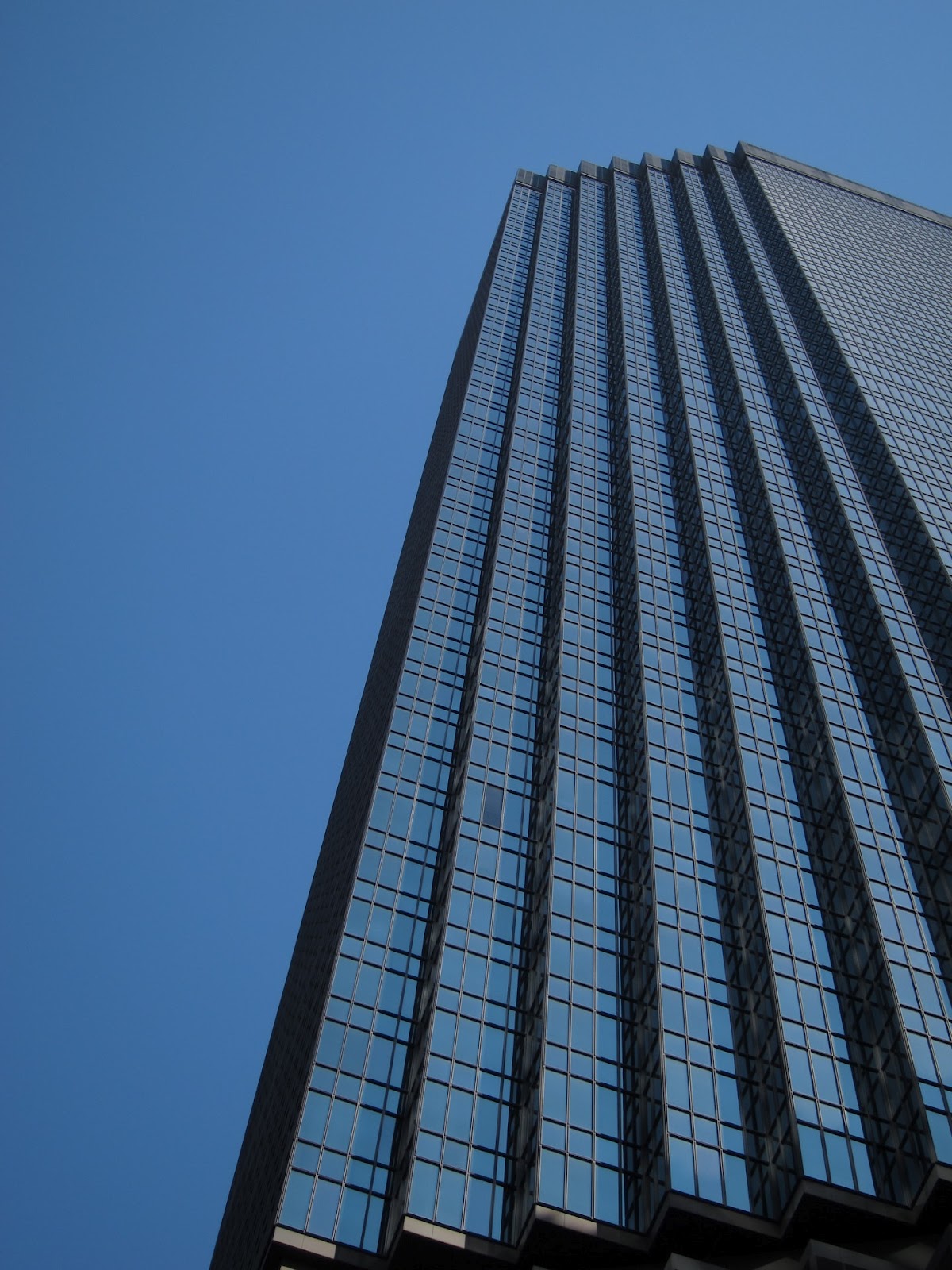
Blue
I took this photo something like 9 months ago, and it just cycled onto my desktop background.
That's a good way to rediscover old favorites.
Thursday, August 16, 2012
Braking Bad
It started with the ChevOldsmobuiac. It was the morning before I was leaving town for a long business trip. The wife and I drove to breakfast, and we noted that the exhaust resonance was a bit loud. "I'll check the mounts when I get back," I thought. She dutifully set the parking brake when we stopped, and we enjoyed a wonderful breakfast.
When we got back in the car, the noise was a bajillion times worse, and the car felt like it was dragging a dead water-buffalo. Welimped drug home, and I changed clothes in the vain hope that I could enact a repair in the few hours before the flight.
Laying under the car, it was obvious that the muffler had torn free of its mount. By this I do not mean rusty metal popping free, rather that shiney clean sheet metal on a fairly new muffler had been curled back by vibrational stress. That will have to be welded before it will pass inspection again, but in the short term, I applied some coat hanger wire to buttress the mount.
Engine noise problem solved.
The lack of urgency was more curious. I jacked up the rear wheels and found that the right rear wheel wouldn't rotate foward: a sign that the parking brake was stuck on. I pulled the wheel and beat the brake drum off with my deadblow hammer. After some fiddling, I determined that the brake cable had seized, quite likely due to the hot exhaust pipe laying across it. In the hopes that my fiddling got some slack back, I pushed the drum back on, and drove the car around the block. Yes, I got some slack out of the cable, but not enough to let the wheel coast free. The car was dead in the water until I got back.
Fortunately, there was the other old standby: the Volvo.
Which worked great, until either last night, or today, when the brake pedal started to go limp. No one remembers when exactly it started, but it was fine all week. Today, it felt a little mushy on the way to work. When I got to the parking lot, I checked for fluid leaks, but found no puddles or seeps. On the way home, it was even worse, the pedal required pumping and nearly bottomed out. I drove ultra conservatively and massively downshifted to bleed speed.
So, now we have one car that is essentially an immobile hulk and another that is an uncontrollable high speed death trap.
That leaves the motorcycle and a bicycle, and there's a 70% chance of thunderstorms tomorrow.
When we got back in the car, the noise was a bajillion times worse, and the car felt like it was dragging a dead water-buffalo. We
Laying under the car, it was obvious that the muffler had torn free of its mount. By this I do not mean rusty metal popping free, rather that shiney clean sheet metal on a fairly new muffler had been curled back by vibrational stress. That will have to be welded before it will pass inspection again, but in the short term, I applied some coat hanger wire to buttress the mount.
Engine noise problem solved.
The lack of urgency was more curious. I jacked up the rear wheels and found that the right rear wheel wouldn't rotate foward: a sign that the parking brake was stuck on. I pulled the wheel and beat the brake drum off with my deadblow hammer. After some fiddling, I determined that the brake cable had seized, quite likely due to the hot exhaust pipe laying across it. In the hopes that my fiddling got some slack back, I pushed the drum back on, and drove the car around the block. Yes, I got some slack out of the cable, but not enough to let the wheel coast free. The car was dead in the water until I got back.
Fortunately, there was the other old standby: the Volvo.
Which worked great, until either last night, or today, when the brake pedal started to go limp. No one remembers when exactly it started, but it was fine all week. Today, it felt a little mushy on the way to work. When I got to the parking lot, I checked for fluid leaks, but found no puddles or seeps. On the way home, it was even worse, the pedal required pumping and nearly bottomed out. I drove ultra conservatively and massively downshifted to bleed speed.
So, now we have one car that is essentially an immobile hulk and another that is an uncontrollable high speed death trap.
That leaves the motorcycle and a bicycle, and there's a 70% chance of thunderstorms tomorrow.
Wednesday, August 1, 2012
If a Tree Falls and Almost Hits Your House...
... You know.
It makes a huge loud noise and scatters twigs and branches all over the place.
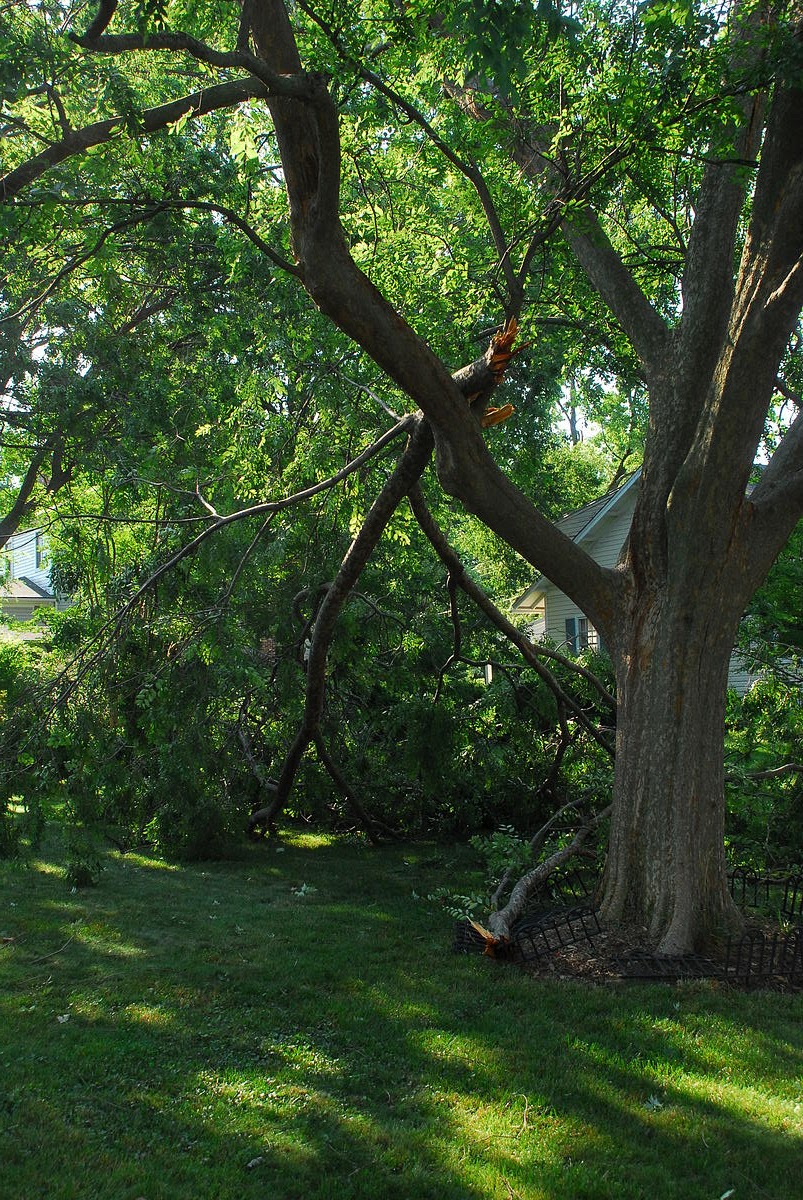
I need to chop the hulk into little pieces and see if I can find someone to who wants to burn it this winter. I also need to talk with the landlord about getting some of the other big snags cut down. We got smaller limbs cut from live trees just before the derecho (lucky us), but elected to leave the snags. This latest event suggests we should re-evaluate the risk of catastrophic dead tree failure. There's one in particular that looks ideally positioned for a direct hit. The irony of having our house crushed after the derecho would be crushing (all puns intended).
This tree can probably just reach the house. (Should I do the math and find out? Maybe I shall).
This tree wants to fall on my house like my dog want chicken for dinner.
It makes a huge loud noise and scatters twigs and branches all over the place.
I need to chop the hulk into little pieces and see if I can find someone to who wants to burn it this winter. I also need to talk with the landlord about getting some of the other big snags cut down. We got smaller limbs cut from live trees just before the derecho (lucky us), but elected to leave the snags. This latest event suggests we should re-evaluate the risk of catastrophic dead tree failure. There's one in particular that looks ideally positioned for a direct hit. The irony of having our house crushed after the derecho would be crushing (all puns intended).
This tree can probably just reach the house. (Should I do the math and find out? Maybe I shall).
Derecho Photos
The power was out. How was I supposed to share these then?
The huge power outage in India reminded me of the week without power here. They must be absolutely miserable. I hope things get "fixed" soon, with a real infrastructure investment down the road.
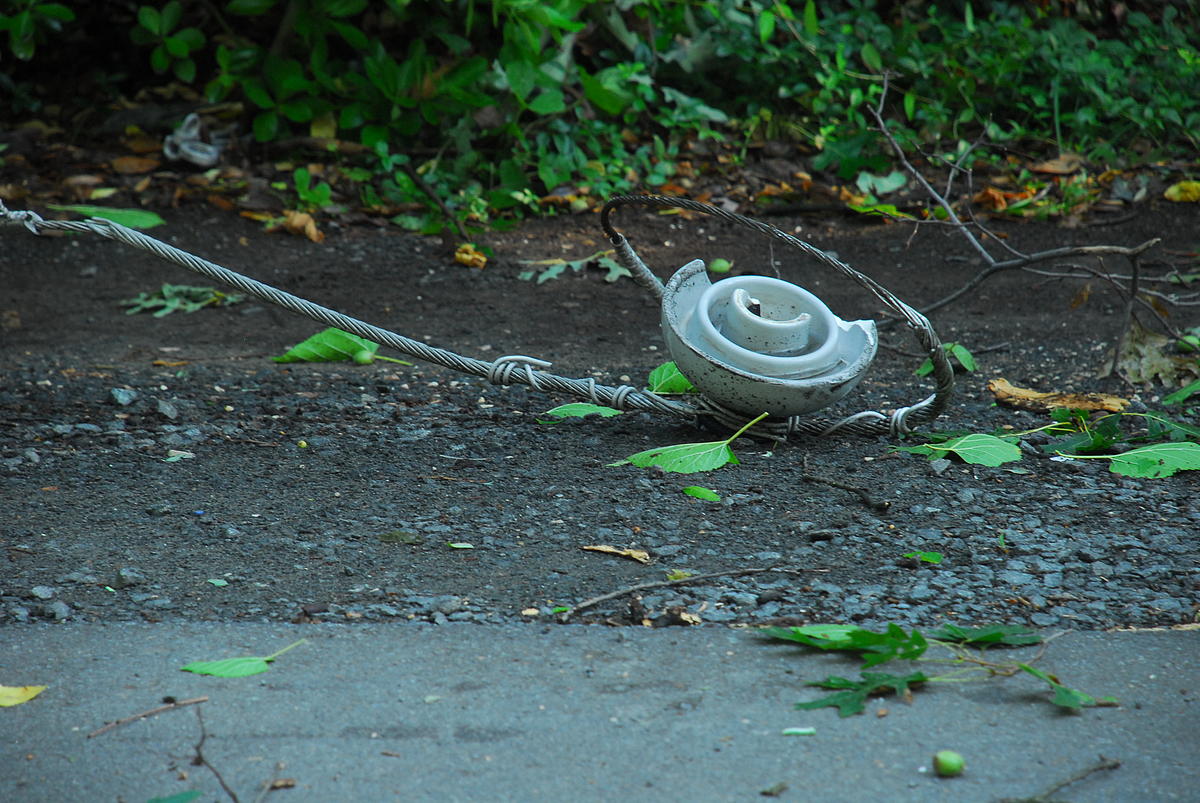
The tree that fell in the street, taking out both the residential and distribution lines:
Chipper hard at work:
Another downed limb:
Fence and all
Surveying the damage
High quality new home construction:
There was some nice moments in there too. Don't go around believing it was the worst thing in the world.
The huge power outage in India reminded me of the week without power here. They must be absolutely miserable. I hope things get "fixed" soon, with a real infrastructure investment down the road.
The tree that fell in the street, taking out both the residential and distribution lines:
Chipper hard at work:
Another downed limb:
Fence and all
Surveying the damage
High quality new home construction:
There was some nice moments in there too. Don't go around believing it was the worst thing in the world.
Subscribe to:
Posts (Atom)